

Key Takeaways
- Both compounded tirzepatide and Mounjaro use the same active ingredient (tirzepatide), so they work in a similar way. The main difference comes down to regulation, cost, and how the medication is delivered.
- Mounjaro is FDA-approved and backed by clinical trials. It offers standardized dosing in pre-filled pens and is often covered by insurance for diabetes, making it the more regulated and predictable option.
- Compounded tirzepatide is more affordable but less regulated. It has no FDA approval, may vary by pharmacy, and is typically used when patients pay out of pocket or need customized dosing.
- The best choice depends on your situation. Budget, insurance coverage, medical needs, and comfort with FDA-approved vs. compounded medications all determine which option makes more sense.
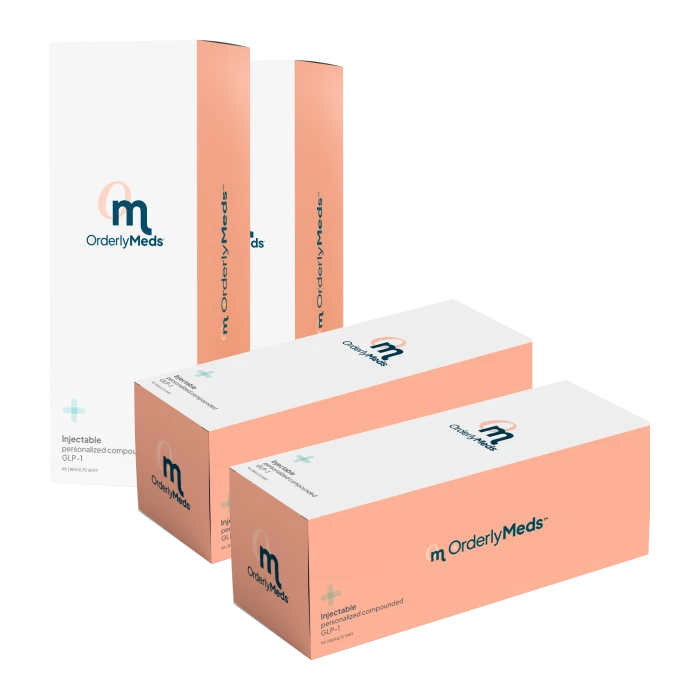
- OrderlyMeds offers compounded GLP-1/GIP tirzepatide with telehealth consultations, personalized dosing, and flexible plans delivered directly to your door.
Compounded Tirzepatide vs Mounjaro: Which Is Better for You?
Neither compounded tirzepatide nor Mounjaro is universally “better” because the right choice depends on your budget, insurance situation, medical history, and comfort with FDA-approved versus compounded medications.
Both contain the same active ingredient, tirzepatide, a dual GLP-1/GIP receptor agonist that reduces appetite and supports blood sugar regulation. Mounjaro has FDA approval and clinical trial data, while compounded tirzepatide offers significantly lower costs and greater dosing flexibility for patients paying out of pocket.
If you have insurance that covers Mounjaro for type 2 diabetes, the brand-name version may be the more straightforward option. If you are paying out of pocket for weight management and your provider determines that a compounded formulation meets your medical needs, compounded tirzepatide can deliver the same active drug at a fraction of the cost.
This guide compares these two options across regulation, effectiveness, safety, dosing, and access so you can make an informed decision with your healthcare provider.
OrderlyMeds: Medically-Supervised GLP-1 Weight Loss Made Accessible
Meaningful Results in Your First 3 Months | 4.9★ Google Rating

Sustainable Weight Loss with Expert Support:
Access compounded semaglutide or tirzepatide through telehealth—significantly more affordable than branded alternatives. Join 125,000+ patients who’ve collectively lost over 2 million pounds with ongoing medical guidance and personalized dosing.
Your Complete Care Package Includes:
✓ $224 for a 3-month starter plan (compounded semaglutide)
✓ Unlimited provider access with personalized dosing adjustments
✓ $3,700 value in nutrition resources, expert webinars, and community support
✓ Direct-to-home delivery with optional mental health support
Real medical care. Real results. Real support every step of your journey.
What Is Mounjaro?
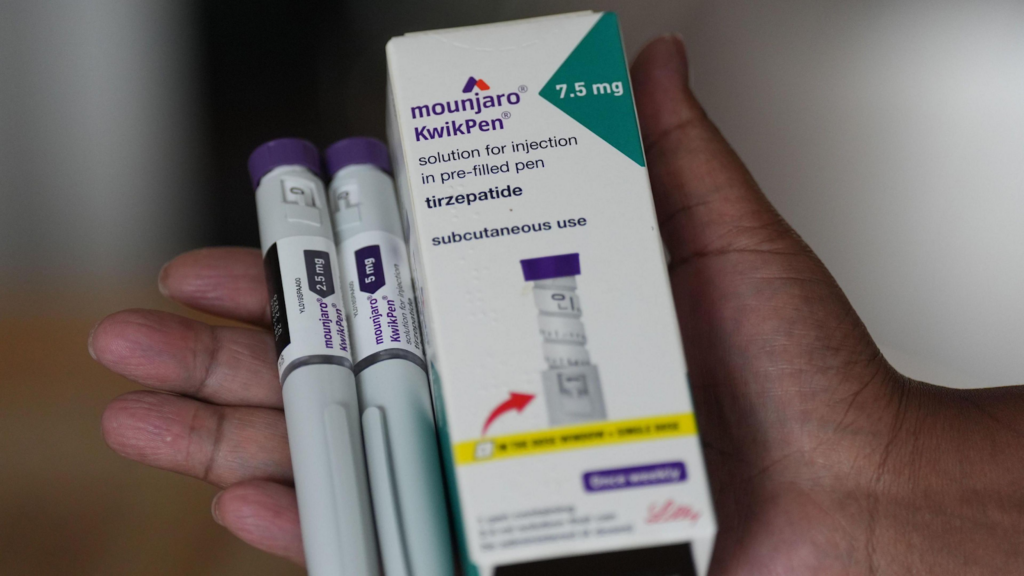
Mounjaro is the brand name for tirzepatide, manufactured by Eli Lilly. The FDA approved it in 2022 for adults with type 2 diabetes to help manage blood sugar levels alongside diet and exercise. Physicians also prescribe Mounjaro off-label for weight loss in patients with obesity or overweight.
As a dual GLP-1/GIP receptor agonist, Mounjaro mimics two natural hormones that regulate blood sugar, slow stomach emptying, and reduce appetite. This dual-action mechanism sets it apart from single-action GLP-1 medications like semaglutide (the active ingredient in Ozempic and Wegovy), which target only the GLP-1 receptor. The added GIP receptor activity may contribute to greater metabolic benefits and is associated with reduced nausea in some patients.
Mounjaro comes in pre-filled injection pens and follows a fixed-dose titration schedule. Patients typically start at 2.5 mg once weekly, with their provider gradually increasing the dose in 2.5 mg increments up to a maximum of 15 mg per week.
What Is Compounded Tirzepatide?
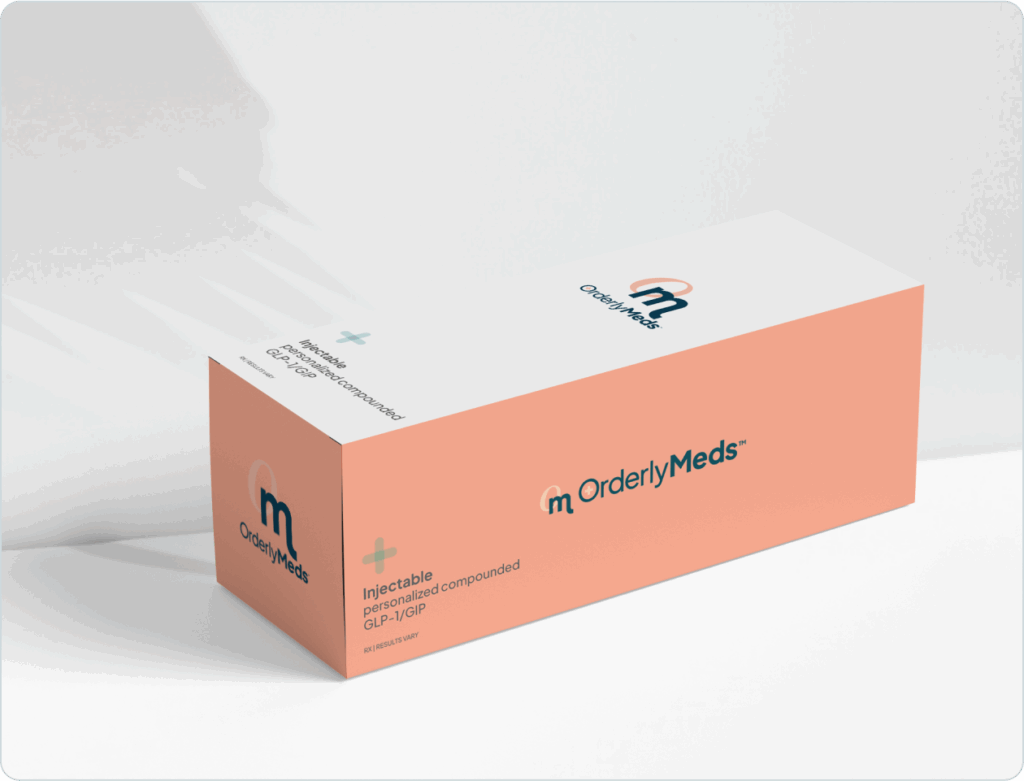
Compounded tirzepatide is a version of the same active ingredient prepared by licensed compounding pharmacies. These pharmacies mix and formulate the medication to meet individual patient needs, sometimes adding ingredients such as B vitamins or adjusting the dosage form (e.g., multi-dose vials instead of pre-filled pens).
Compounded tirzepatide is not FDA-approved. The FDA does not review compounded medications for safety, efficacy, or quality the way it does for brand-name drugs. During the national tirzepatide shortage that began in 2022, the FDA allowed compounding pharmacies to produce tirzepatide under temporary enforcement discretion. That discretion period for 503A state-licensed pharmacies and 503B outsourcing facilities ended in early 2025 after the FDA declared the shortage resolved.
As of 2026, compounded tirzepatide may still be prescribed in limited circumstances. A licensed healthcare provider must determine that a patient has a specific medical need that cannot be met by an FDA-approved formulation, such as an allergy to an inactive ingredient in branded products. Compounding for general cost savings alone does not meet FDA criteria under Section 503A.
Patients considering compounded tirzepatide should verify that their provider sources the medication from a reputable, licensed compounding pharmacy that adheres to sterile compounding standards.
Effectiveness: How Do They Compare?
Both compounded tirzepatide and Mounjaro use the same active ingredient, so their underlying mechanisms of action are identical. The clinical evidence, however, comes from trials conducted with the branded, FDA-approved formulation.
In the SURMOUNT-1 trial published in The New England Journal of Medicine, participants with obesity (without type 2 diabetes) who received tirzepatide achieved mean weight reductions of 15.0% on 5 mg, 19.5% on 10 mg, and 20.9% on 15 mg over 72 weeks, compared to 3.1% with placebo. In a separate head-to-head comparison (SURMOUNT-5), tirzepatide produced a mean weight reduction of 20.2% at 72 weeks, compared with 13.7% for semaglutide (Wegovy).
Compounded tirzepatide has not been tested in its own clinical trials. Because compounding pharmacies may use different inactive ingredients, concentrations, or delivery formats, the results observed with branded tirzepatide cannot be directly applied to compounded versions. That said, the active ingredient is the same, and many patients report positive outcomes with compounded formulations when sourced from reputable pharmacies and used under medical supervision.
Safety & Side Effects
The most common side effects of tirzepatide (both branded and compounded) are gastrointestinal: nausea, diarrhea, decreased appetite, vomiting, constipation, and abdominal pain. These side effects tend to be most noticeable during the initial weeks and during dose increases. Starting at a low dose and titrating gradually helps minimize discomfort for most patients.
Serious but rare risks include pancreatitis, gallbladder problems, and potential thyroid concerns. In rat studies, tirzepatide caused a dose-dependent increase in thyroid C-cell tumors, and it is unknown if this applies to humans. Tirzepatide is contraindicated for individuals with a personal or family history of medullary thyroid carcinoma (MTC) or Multiple Endocrine Neoplasia syndrome type 2 (MEN 2).
For Mounjaro specifically, the FDA approval process included rigorous testing for safety, dosing consistency, and sterility. With compounded tirzepatide, those guarantees depend entirely on the compounding pharmacy’s quality control.
Patients taking any form of tirzepatide should work closely with a licensed healthcare provider to monitor progress, manage side effects, and adjust dosing safely.
Dosing & Flexibility
Mounjaro uses a straightforward, fixed-dose titration schedule. Patients begin at 2.5 mg weekly and increase by 2.5 mg every 4 weeks, up to a maximum of 15 mg. The medication comes in pre-filled single-use pens, which makes administration simple but leaves little room for customization.
Compounded tirzepatide can offer more dosing flexibility. Compounding pharmacies can prepare the medication in multi-dose vials, allowing providers to prescribe doses between standard increments. For patients who experience strong side effects at certain thresholds, this flexibility can make the titration process smoother. It also allows for more gradual dose adjustments during maintenance phases.
The trade-off is that compounded formulations lack the standardized manufacturing process of branded Mounjaro. Potency and consistency can vary between compounding pharmacies, which is why choosing a provider that works with licensed, inspected pharmacies is critical.
Compounded Tirzepatide Vs. Mounjaro: Comparison Table
| Feature | Compounded Tirzepatide | Mounjaro |
| Active Ingredient | Tirzepatide (GLP-1/GIP) | Tirzepatide (GLP-1/GIP) |
| FDA Approved | No | Yes (type 2 diabetes) |
| Used for Weight Loss | Yes (provider-determined) | Yes (off-label) |
| Relative Cost | Significantly lower | Higher without insurance |
| Insurance Coverage | Rarely covered | Often covered for diabetes; limited for weight loss |
| Dosing Flexibility | Customizable doses | Fixed-dose pre-filled pens |
| Delivery Format | Multi-dose vials (varies) | Pre-filled single-use pens |
| Clinical Trial Data | None specific to compounded formulation | SURMOUNT trial program (up to 20.9% weight loss at 72 weeks) |
| Supply Availability | Generally available | Occasional supply constraints |
Get Medically Supervised Tirzepatide Care from OrderlyMeds

At OrderlyMeds, we provide accessible, medically supervised weight loss with compounded tirzepatide through telehealth. Our licensed providers manage personalized dosing and stay involved throughout treatment. Plans include consultations, medication, supplies, home delivery, and HSA or FSA payment options.
We support patients beyond medication with dietitian-created meal plans, webinars, and optional BetterHelp mental health support. Our community of over 125,000 patients reflects our holistic approach focused on nutrition, movement, and long-term results.
Check your eligibility for compounded tirzepatide today.
Frequently Asked Questions (FAQs)
Is compounded tirzepatide the same as Mounjaro?
Compounded tirzepatide contains the same active ingredient as Mounjaro but is prepared by compounding pharmacies rather than Eli Lilly. The FDA does not review compounded versions for safety, efficacy, or quality, so they are not identical products despite sharing the same drug compound.
Can I use Mounjaro for weight loss if I don’t have diabetes?
Mounjaro is FDA-approved only for type 2 diabetes. Providers can prescribe it off-label for weight loss (meaning outside its FDA-approved use), but insurance coverage is less likely in that case. Zepbound, also made by Eli Lilly, contains the same tirzepatide ingredient and is FDA-approved specifically for chronic weight management.
Why is compounded tirzepatide more affordable than Mounjaro?
Compounded medications are produced by pharmacies without the costs associated with large-scale pharmaceutical manufacturing, FDA clinical trials, and brand-name marketing. These lower production costs translate to lower out-of-pocket expenses for patients, though insurance typically does not cover compounded drugs.
What are the most common side effects of tirzepatide?
Nausea, diarrhea, vomiting, decreased appetite, and constipation are the most frequently reported side effects. They tend to be mild to moderate and often improve as the body adjusts. Starting at a low dose and increasing gradually helps reduce discomfort.
What makes OrderlyMeds different from other telehealth weight loss providers?
OrderlyMeds combines compounded GLP-1/GIP tirzepatide access with ongoing provider support, personalized dosing adjustments, and a full care package that includes nutrition resources, fitness plans, expert webinars, and a 125,000+ patient community. Plans are flexible with no membership fees or hidden costs.
*Disclaimer: This article is for informational purposes only and does not constitute medical advice. OrderlyMeds provides compounded medications that have not been reviewed by the FDA for safety, efficacy, or quality. Always consult a licensed healthcare provider before starting any medication. Individual results vary, and medication should be used alongside healthy lifestyle practices.